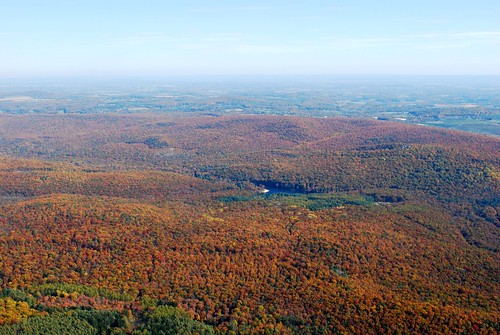
Look across the Eastern half of South Mountain and you will find a landscape of incredible beauty. Pastoral, working lands dotted with orchards, and forests abutting one of the largest contiguous publicly owned forests near the DC-Baltimore metro area. The lands surrounding Gettysburg have some of the highest growth pressures in Pennsylvania, yet there are landowners dotting the landscape that choose to preserve their property. Read about those who are choosing to preserve the landscape in the Tales of Preservation, created by the Land Conservancy of Adams County and funded through the South Mountain Mini-Grant program. See the booklet below.
The landowners in this booklet have decided to preserve their properties and have thus created a legacy for future generations. The vehicle for preservation is called a conservation easement, or preservation agreement. An easement is an agreement between the landowner and land conservancy which limits certain uses on all or a portion of a property, while keeping the property in the landowners’ownership and control.
The vision of the Land Conservancy of Adams County is to protect the diverse and distinctive natural resources of Adams County – from the summits of South Mountain to the cool clear native trout waters of the Narrows, from the rich rolling hills of the Fruit Belt to the pitch pine-scrub of the Big Flat Barren, from the amphibian-filled seeps and wetlands of Marsh Creek to the bird-breeding southern grasslands, from the richly cultivated croplands of the east with their interspersed woodland tracts harboring whitetail deer, from the scenic mid-nineteenth century agricultural landscapes of the East Berlin area to the green foal-filled pastures of the Hanover Shoe Farms, from the prized vistas of High Rock and Little Round Top to the boulder-strewn hillside at Devil’s Den.
This is a South Mountain Mini-Grant project. This project was financed in part by a grant from the Community Conservation Partnerships Program, Environmental Stewardship Fund, under the administration of the Department of Conservation and Natural Resources, Bureau of Recreation and Conservation.
Tales of Preservation Booklet
FEATURED PROJECT....
Community Supported Forests Booklet- An all local wood product guide
![]() |
| Click here to download the South Mountain Community Supported Forests Guide |
Community Supported Forests reflect a community shared land ethic. We know we want to protect the character and quality of life that Central Pennsylvania’s scenic woodlands and ridges provide us. Abundant, clean water, un-fragmented habit for wildlife and diverse recreational opportunities are all enjoyed in our forested landscape. Additionally, when we connect our healthy forests and the marketplace, by harvesting and converting wood into quality products, more value is sent back to the forest and forest stewards, keeping local forests healthy, beautiful, and productive.
Like small farms, small forest product operations serve a vital role in our communities. When you buy locally, your money stays within the community, bolstering the local economy.
Download the attached Community Supported Forests Booklet. Contact these local vendors to help keep our local forests sustainable. We have made every effort to include as many businesses as possible. If you have an update or correction to the publication please contact Debbie Bowman at 717-241-4360 or dbowman@CentralPaConservancy.org Hard copies of this booklet will be available shortly.The Appalachian Trail Museum
![]() |
| The Appalachian Trail Museum Images courtesy of the Cumberland Valley Visitors Bureau |
The South Mountain Mini-grant helped fund critical projects that would get the museum open, including making the museum handicap accessible and funding some interpretive panels.
The Museum is located in Pine Grove Furnace State Park and has become an amazing addition to the area.
To learn more about it check out the Appalachian Trail Museum webpage
This project was financed in part by a grant from the Community Conservation Partnerships Program, Environmental Stewardship Fund, under the administration of the Department of Conservation and Natural Resources, Bureau of Recreation and Conservation.
The South Mountain GeoTrail
Travel across the South Mountain region and you will find an abundance of cultural and natural treasures from farms and farm markets, wineries, historic sites, forestlands, unique water features, and bustling recreation assets. During the spring and summer of 2010, Capital Resource Conservation and Development (Capital RC&D) will inventory and connect these sites through a “Geo-Cache Trail” project.FOR MORE INFORMATION, CHECK OUT
THE GEO-CACHE WEBSITE or
THE GEO-CACHE BLOG
Geo-caching provides many benefits to the caching sites, including increased visitor use, increase revenue, the use of the program as an education tool, and developing awareness of the region’s assets. The South Mountain GeoTrail Project will enhance a sense of place for residents and visitors alike, by getting folks outdoors.
![]() |
Attendees at the 2010 South Mountain Geo-Bash at the Iron Master's Mansion at Pine Grove Furnace State Park |
This adventure sport/hobby is a great family activity and getting started is easy! All you need is a handheld GPS receiver (new ones are available for as little as $80) and internet access. With the tools outlined, the participant visits designated sites in a “treasure-hunt” style experience. A typical cache consists of a waterproof container, a log book, and trinkets. Signing the log book proves you found it, and the trinkets provide trade items; the idea is to take an item, then replace it with an item of equal value. Once the log book is signed and trinkets exchanged, the container is put back in exactly the same place it was found, to await the next finder.
This project was financed in part by a grant from the Community Conservation Partnerships Program, Environmental Stewardship Fund, under the administration of the Department of Conservation and Natural Resources, Bureau of Recreation and Conservation.
Labels:
2009 Mini-Grants
The Local Food, Farm, and Outdoor Guide- Now Available
![]() |
| Download this guide by clicking on the link to the right |
The goal of the project is to promote local agricultural operations and outdoor recreation locations and to educate the public on the importance of agriculture and our abundant natural resources to the quality of life of the County. The guide includes a directory of farmers markets, roadside stands, pick your own operations, farmstays and other agritourism locations. In addition, the guide includes information on outdoor recreation opportunities available in Cumberland County.
You can pick this guide up at the Cumberland County Visitors Bureau, the Appalachian Trail Conservancy, and several other locations.
This project was financed in part by a grant from the Community Conservation Partnerships Program, Environmental Stewardship Fund, under the administration of the Department of Conservation and Natural Resources, Bureau of Recreation and Conservation.
Labels:
2009 Mini-Grants
Subscribe to:
Posts (Atom)